by Dr Neelima Mantri | Apr 22, 2026 | Blog, Female Gynaecologist
Most women do not think about cancer during a routine check-up. It usually comes up only when there is a symptom that refuses to go away. By then, the conversation feels heavier than it should have been.
But the truth is, many concerns around women’s health begin quietly. They do not always start with pain or visible changes. That is why discussions around gynecologic cancer prevention are becoming more important, even for those who feel completely fine.
It is not about creating fear. It is about noticing what often goes unnoticed.
Why Prevention Feels Confusing For Many
A common assumption is that cancer cannot be prevented. That belief stays until someone hears otherwise during a consultation or reads about early detection.
In reality, some conditions can be reduced or managed early. For example, efforts to prevent cervical cancer often focus on regular screening and timely vaccination. These are small steps, but they shift outcomes over time.
Still, many women delay these checks. Sometimes it is due to busy schedules. Sometimes it is hesitation. And sometimes, it is simply not knowing when to start.
The Role Of Routine Screening
Screening does not always mean something is wrong. It simply means you are checking before something develops further.
A woman’s cancer screening test can help identify changes that are not yet causing symptoms. That is where the real value lies. Early findings are often easier to manage.
Regular gynecologist cancer screening becomes even more relevant with age, family history, or hormonal changes. These are not things that can be predicted casually, which is why consistency matters more than urgency.
Understanding Risk Without Overthinking It
Risk does not mean certainty. It only means awareness.
Take ovarian health, for example. There are no simple early signs in many cases. That is why discussions around ovarian cancer prevention tips often include lifestyle awareness along with periodic evaluations.
Similarly, uterine cancer prevention focuses on recognising irregular patterns early, especially changes in menstrual cycles or unexpected bleeding.
These are not always serious signs, but they should not be ignored either.
Choosing The Right Guidance Matters
At some point, reading and guessing stop being helpful. That is when professional input becomes necessary.
Finding a gynecologist specialist in Mumbai who understands both routine care and complex conditions can make a difference in how comfortable these conversations feel.
Many women also look for the best gynecologist for cancer screening when they want clarity without unnecessary stress. The approach matters as much as the diagnosis.
Simple Habits That Often Make A Difference
- Have a yearly check-up despite the absence of symptoms.
- Do not overlook abnormal bleeding or chronic pain.
- Adhere to vaccination and screening instructions provided by your physician.
- Lead a healthy, hormonally friendly lifestyle.
- Monitor family history and talk about it at consultations.
Conclusion
Prevention is not typically a single step. It is typically narrowed down to minor decisions made on a daily basis. Knowing your body, posing questions and making frequent check-ups can alter the way these conditions are diagnosed and treated. To find out an informed and personalised treatment, you can see Dr. Neelima Mantri to make the process of approaching women’s health more open and confident.
by Dr Neelima Mantri | Apr 15, 2026 | Blog, Laparoscopic Surgery
Most people hear the word surgery and immediately think of long incisions, hospital stays, and a slow return to normal life. That image still exists, but it does not always apply anymore. Over time, newer methods have quietly changed how certain procedures are done, especially in women’s health.
That is where laparoscopy surgery for women starts to come into the conversation. It does not look like traditional surgery, and more importantly, it does not feel like it either.
What Laparoscopy Actually Means In Simple Terms
Instead of a large cut, this method uses very small openings. A thin instrument with a camera is inserted, which allows the doctor to see inside the body without opening it fully. That alone changes a lot about the experience.
For patients, the idea feels less intimidating once they understand how it works. For doctors, it allows more precision. A trained gynec laparoscopy specialist usually relies on this approach for several conditions that earlier needed more invasive methods.
Why Doctors Recommend It In Certain Cases
There is a reason this method is now preferred in many situations. It reduces strain on the body while still addressing the actual problem. That balance is what makes it useful.
It is commonly used for:
- Diagnosing internal conditions that are not visible through scans.
- Removing fibroids through laparoscopy for fibroids treatment.
- Managing chronic pelvic pain linked to laparoscopy for endometriosis.
- Supporting cases where laparoscopy for infertility treatmentis being considered.
- Treating ovarian cysts with minimal disruption.
- Handling ectopic pregnancies in a controlled way.
- Performing hysterectomy procedures without large incisions.
- Reducing recovery time compared to open surgery.
- Lowering the risk of visible scarring.
- Allowing quicker return to daily activities.
- Offering better visual clarity during surgery for the doctor.
Each of these points matters differently depending on the patient. That is why no two cases are handled exactly the same way.
How The Procedure Usually Feels From The Patient’s Side
Most patients are more anxious before the procedure than after. The process itself is done under anesthesia, so there is no pain during the surgery. What people notice more is the recovery phase.
There is some discomfort, but it is often manageable. Since the incisions are small, the body does not go through the same level of stress as traditional surgery. This is where experience plays a role. A skilled gynecologist laparoscopy specialist in Mumbai knows how to keep the procedure as smooth as possible.
Recovery Is Not Instant, But It Is Different
Recovery still requires care, but it usually feels more gradual than restrictive. Patients are often able to move within a day, which surprises many of them.
There are still precautions. Heavy lifting is avoided. Rest is important. But the timeline feels shorter. That difference is what makes many people consider this option when advised by the best gynecologist for laparoscopy surgery.
Where Decision Making Becomes Important
Not every condition needs surgery, and not every patient is suited for laparoscopy. This is where consultation becomes critical.
An experienced gynec laparoscopy specialist looks at symptoms, reports, and long-term outcomes before suggesting anything. It is not just about the procedure. It is about whether it actually helps the patient move forward.
Conclusion
Laparoscopy has today transformed the management of most of the gynecological conditions. It provides an option for handling problems without subjecting the body to unwarranted stress. Patients are given a personalised approach and treatment, and recovery is given equal importance under the guidance of Dr. Neelima Mantri.
by Dr Neelima Mantri | Mar 26, 2026 | Blog, Pregnancy Care
The moment you find out you are pregnant, a lot of thoughts start coming in. Some are exciting, some are confusing. One question that shows up quite early is about tests. More specifically, sonography scans during pregnancy.
You hear about them from doctors, friends, and even family members. But the exact number? That part is not always clear. And honestly, it can feel a bit overwhelming at first.
If you are wondering how many scans are actually needed, you are definitely not the only one thinking this way. Many women go through the same confusion, especially during their first pregnancy.
Why Are Sonography Scans Important?
Before counting scans, it helps to know why they matter so much. Sonography, or ultrasound, is simply a method by which physicians can monitor what is going on inside. It provides a live picture of the development of the baby and also assists in monitoring whether all is proceeding as planned.
The scan is usually performed in the initial stages to verify things. Is the pregnancy progressing normally? Is there a heartbeat? These are the initial few questions that doctors attempt to answer.
The purpose is slightly different as time goes by. Subsequent scans are more concerned with growth, movement, and position. In a sense, therefore, every scan has its part. This is why they are spaced throughout the pregnancy.
How Many Ultrasounds During Pregnancy Are Needed?
Now, coming to the main thing, people want to know. How many ultrasounds during pregnancy are actually required? In most normal cases, doctors suggest around three to four scans. Not too many, not too few. Just enough to track progress properly.
The first one usually happens early. This is mainly for confirmation and to get an idea of the due date. Then comes the NT scan. This one is more about screening and checking for certain conditions. After that, somewhere around 18 to 20 weeks, there is the anomaly scan. This is a detailed one. Doctors take a close look at the baby’s organs here. Towards the later stage, a growth scan may be advised. This helps understand how the baby is developing and whether the position is suitable for delivery.
However, not all people are the same. In case of any complication or when the pregnancy is deemed to be high-risk, physicians might request additional scans. So the number of sonography scans during pregnancy is not fixed in every case.
Choosing the Right Doctor for Pregnancy Scans
Another thing that matters, and people sometimes underestimate, is choosing the right doctor. If you are searching for a pregnancy care specialist in Mumbai, you will probably come across many options. But experience makes a big difference here. A good doctor will not just tell you to get a scan done. They will explain why it is needed and what to expect from it. That clarity helps reduce a lot of unnecessary worry.
For example, Dr Neelima Mantri is someone many patients trust. With more than 20 years of experience, she has handled both routine and high-risk pregnancies. She has been associated with hospitals like Bombay Hospital, Nanavati Hospital, and AUM Health. Because of this background, she is often considered one of the best gynecologists for pregnancy scans.
Final Thoughts
By now, you probably have a rough idea of how this works. Most pregnancies involve around three to four scans. But that is just a general guideline. It is not a strict rule. What matters more is your individual situation. Your doctor’s advice should always come first. If something still feels unclear, it is completely okay to ask questions. In fact, it helps.
At the end of the day, a well-guided pregnancy usually feels much more manageable. And that makes a big difference for both the mother and the baby.
by Dr Neelima Mantri | Mar 23, 2026 | Blog, Pregnancy Complications
When you start thinking about having a baby, it is rarely just a medical decision. There is excitement, a bit of confusion, and usually a lot of questions running through your mind. One of the biggest ones is whether you are actually ready for pregnancy.
This is where preconception counseling comes in, though many people tend to skip it.
A lot of couples simply begin trying without checking if their body is fully prepared. That might work for some, but not always. Taking a little time to understand your health before conceiving can change how smoothly things go later.
In simple words, preconceptional counseling and care mean getting medical advice and guidance before pregnancy. It helps you spot possible risks early and gives you a chance to improve your overall health before you conceive.
Why is preconception counseling Important?
Most people assume that if they feel healthy, they are good to go. But pregnancy is different. It puts extra demands on the body, and small issues can become bigger if ignored.
During preconception counseling, your doctor usually looks at your past medical history, daily habits, and any existing conditions. This step often brings up things you might not have considered important.
For example, conditions like thyroid imbalance or diabetes may not feel serious day to day, but they can affect pregnancy if not controlled. Even something as simple as low iron or vitamin levels can matter.
Another thing people often look for is clarity on how to prepare for pregnancy. This process helps answer that in a realistic way. It is not just about physical health. Your mental readiness matters too, though it is often ignored.
What Happens During a preconception consultation gynecologist?
If you have never been for a preconception consultation with a gynecologist, you might expect something complicated. It is actually quite straightforward. The doctor usually starts with basic questions and then builds from there. You can expect things like:
- A discussion about your medical and family history
- Some blood tests, if required
- Questions about your diet, sleep, and lifestyle
- Advice on supplements like folic acid
- A conversation around fertility, if you have concerns
If it is your first time planning a pregnancy, the focus is usually on building good habits. If there have been complications earlier, the doctor may take a more careful approach.
How to prepare for pregnancy?
This part is often underestimated. Preparing for pregnancy is not something you do in a week. It is more about small changes that you stick with. If you are wondering how to prepare for pregnancy, start with the basics:
- Eat proper meals instead of skipping or relying on junk food
- Cut down on smoking or alcohol if that is part of your routine
- Try to stay active, even simple walking helps
- Pay attention to stress, it affects more than people realise
- Do not ignore medical advice or follow-ups
None of this needs to be perfect. Consistency matters more than perfection.
Choosing the best gynecologist for pregnancy planning
One thing that really makes a difference is the doctor you choose. The best gynecologist for pregnancy planning is not just someone with experience, but someone who explains things clearly and listens to you.
If you are in Mumbai, many people prefer consulting the best pregnancy care gynecologist in Mumbai for better guidance throughout the process. Having the right support can make the whole journey feel less overwhelming.
Dr. Neelima Mantri is one of the experienced names in this area. With more than 20 years in obstetrics and gynecology, she has handled high-risk pregnancies, infertility concerns, and laparoscopic procedures. She is associated with hospitals like Bombay Hospital, Nanavati Hospital, and AUM Health, and has guided many patients through safe pregnancies.
Final Thoughts
Preconception care is often ignored because it does not feel urgent. But in reality, it sets the foundation for everything that comes next.
Taking time for preconception counseling gives you a clearer picture of your health and what needs attention. It also helps you feel more prepared, which matters just as much.
If you are planning to conceive, do not rush into it blindly. A little preparation now can save you from unnecessary stress later.

by Dr Neelima Mantri | Mar 23, 2026 | Blog, Gynecologist
Women looking for trusted and personalized gynecological care in Khar West, Bandra, and surrounding Mumbai areas can consult Dr. Neelima Mantri at VLSR – The Clinic. Known for its calm and discreet environment, the clinic is ideal for women seeking expert guidance for both routine and sensitive health concerns.
About Dr. Neelima Mantri
Dr. Neelima Mantri is an experienced gynecologist known for her compassionate approach and clear medical guidance. She focuses on understanding each patient’s concerns in detail and provides treatment plans that are practical, evidence-based, and tailored to individual needs. Her patient-friendly consultation style helps women feel comfortable discussing even the most personal health issues.
Gynecological Services Offered at VLSR – The Clinic
Dr. Neelima Mantri offers comprehensive gynecological consultations at VLSR – The Clinic, including:
- PCOS (Polycystic Ovary Syndrome)diagnosis and long-term management
- Treatment for irregular menstrual cyclesand hormonal imbalances
- Evaluation and monitoring of ovarian cysts
- Fertility and infertility evaluationwith proper counseling
- Preventive gynecologyand routine women’s health checkups
- General gynecological consultation and lifestyle guidance
Why Choose VLSR – The Clinic, Khar West?
VLSR – The Clinic is designed to provide women with a stress-free and private consultation experience. Key reasons patients prefer this clinic include:
- Calm, discreet, and hygienic consultation space
- Personalized attention for every patient
- Focus on preventive and long-term women’s health
- Easily accessible location on Linking Road, Khar West
- Ideal for women from Khar, Bandra, Santacruz, and nearby areas
Consultation Focus Areas
- PCOS and hormonal imbalance care
- Irregular periods treatment
- Fertility and infertility evaluation
- Ovarian cyst assessment
- Preventive gynecology and women’s wellness
Book a Gynecologist Consultation in Khar West
If you are searching for a reliable gynecologist in Khar West, consult Dr. Neelima Mantri at VLSR – The Clinic for expert, confidential, and personalized women’s healthcare. Early consultation can help prevent complications and support long-term reproductive health.
Consultation Timings
Dr. Neelima Mantri is available for gynecology consultations at VLSR – The Clinic during:
Monday to Saturday
11:00 AM – 1:00 PM
These morning consultation hours are convenient for working women and homemakers alike.
Clinic Location & Address
VLSR – The Clinic is centrally located in Khar West and is easy to reach from major parts of Mumbai.
Address:
2nd Floor, Corinthian Building,
Opp. DBS Bank, Linking Road,
Khar West, Mumbai – 400052
Location: Khar West, Mumbai
Appointment: +91 7045115577
by Dr Neelima Mantri | Mar 13, 2026 | Blog, Female Gynaecologist
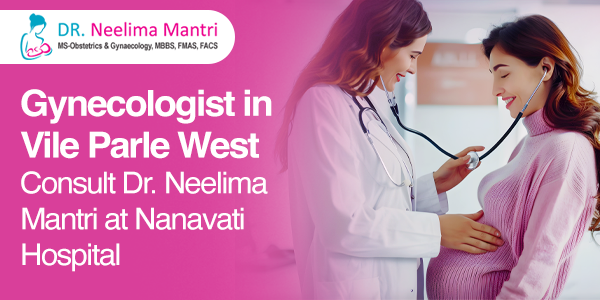
Women searching for a trusted gynecologist in Vile Parle West can consult Dr. Neelima Mantri at Nanavati Hospital, a leading healthcare institution offering advanced gynecology and maternity care.
About Dr. Neelima Mantri
Dr. Neelima Mantri is a skilled and compassionate gynecologist known for her calm demeanor and patient-focused approach. She believes in explaining medical conditions and treatment options clearly, helping patients make informed decisions with confidence. Her evidence-based care and ethical practice have earned her the trust of women across Mumbai.
Gynecological Services Offered at Nanavati Hospital
At Nanavati Hospital, Dr. Neelima Mantri provides comprehensive gynecological consultations for:
Irregular periods and menstrual health concerns
Fertility and infertility consultation
Diagnosis and management of dermoid cysts and ovarian cysts
Pregnancy care, including high-risk evaluation when required
Minimally invasive laparoscopy surgery
General gynecology and women’s wellness guidance
Why Choose Nanavati Hospital, Vile Parle West?
Nanavati Hospital is a preferred healthcare destination for patients across Mumbai due to:
1.Advanced surgical and diagnostic facilities
2.High standards of patient safety and hygiene
3.Experienced multidisciplinary medical teams
4.Modern operation theaters for minimally invasive procedures
5.Trusted reputation as a leading hospital in Western Mumbai
Consultation Focus Areas
Pregnancy and maternity care
Dermoid cyst and ovarian cyst treatment
Fertility and infertility evaluation
Laparoscopy surgery
General gynecology
Book a Gynecologist Consultation at Nanavati Hospital
If you are looking for an experienced gynecologist in Vile Parle West, consult Dr. Neelima Mantri at Nanavati Hospital for safe, advanced, and compassionate women’s healthcare. Early consultation ensures timely diagnosis and effective treatment
Consultation Timings
Dr. Neelima Mantri is available for gynecology consultations at Nanavati Hospital during:
Monday to Saturday
5:00 PM – 7:00 PM
These evening hours are convenient for working professionals and families.
Hospital Location & Address
Nanavati Hospital is centrally located and easily accessible from Juhu, Andheri, Santacruz, and surrounding areas.
Address:
S.V. Road,
Vile Parle (West),
Mumbai – 400056
Location: Vile Parle West, Mumbai
Appointment: +91 7045115577
Page 3 of 53«12345...102030...»Last »