by Dr Neelima Mantri | Jan 21, 2026 | Blog, Gynecologist
Pregnancy changes the body in many ways. One of the most common questions women ask after giving birth is when their period will return. Some expect it to come back within weeks, while others may not see it for several months. Every experience is different. That is why understanding the timing and nature of your first period after delivery can help you prepare better for the postpartum phase.
When Do Periods Return After Pregnancy?
The return of menstruation after childbirth does not follow a set rule. It depends on how the body heals and whether the woman is breastfeeding. For some, the first period may arrive within six to eight weeks. For others, it may take longer.
Hormones play a large role in this timing. If you are not breastfeeding, your period may come back sooner. But if you are nursing, especially exclusively, your cycle may pause for several months. Many women wonder how long after delivery do periods return, but there is no fixed number. Every body works at its own pace.
How Breastfeeding Affects Periods After Delivery
Breastfeeding affects hormone levels. The hormone responsible for milk production, called prolactin, also delays ovulation. This is why many women do not get their periods while breastfeeding. However, it is still possible to ovulate and become pregnant even before the first postpartum period.
Hence, it is imperative to use protection [if you are not planning another pregnancy]. Periods after breastfeeding often return once feeding frequency drops or solid foods are introduced. This process can vary, so staying alert to changes in the body is always helpful.
What to Expect From Your First Period After Childbirth
The first period after childbirth may feel different from your pre-pregnancy cycle. It could be heavier, lighter, more painful, or completely irregular [as these changes are linked to hormone shifts and uterine recovery].
Postpartum periods may also bring more noticeable mood changes and fatigue. Some women report heavy flow or clots [especially during the first few cycles]. For women who had a caesarean, periods after C-section may also vary. Healing from surgery can affect the uterus and change the flow or timing for a few months.
When to See a Gynaecologist for Postpartum Period Problems
If your periods remain extremely heavy, painful, or irregular beyond a few cycles, it is best to speak to a doctor. You should also watch out for signs such as foul-smelling discharge, large clots, or sudden cramps [indicating infection or other complications]. When cycles do not return even after stopping breastfeeding for months, medical review is important.
Therefore, seeking assistance from a trusted Gynaecologist in Mumbai streamlines and manages such complications. Be sure to consult Dr Neelima Mantri for ongoing support during postpartum recovery and menstrual health.
Conclusion
The journey through postpartum recovery includes more than just feeding and rest. Understanding your period after pregnancy is an important part of staying in tune with your health. Some women get their period within weeks while others wait several months.
The return of menstruation after childbirth may bring some surprises [be it a vaginal delivery or a C-section]. Each cycle is your body’s way of returning to balance. By paying attention and seeking help when needed, you can make this transition smoother and more manageable.
by Dr Neelima Mantri | Oct 16, 2025 | Blog, Female Gynaecologist
A follicular scan helps track ovulation in real time so you can plan your pregnancy with greater accuracy. Many women often ask, “When should I get a follicular scan?” Because timing decides how useful the scan will be for fertility planning. The process maps egg growth and shows when your body is ready to release a mature egg.
Understanding Why Follicular Scans Matter
Each month, your ovaries prepare follicles that carry developing eggs. A follicular scan measures their size and growth to see when one becomes dominant. It helps your doctor find the answers to the fundamental question “What is the right time for fertility monitoring?”. So your chances of conception improve naturally or through treatment. The test is non‑invasive and safe for all age groups.
Best Time to Begin the Scan
The best time for a follicular scan depends on your menstrual cycle length. Most doctors begin scanning between the eighth and tenth day of your period. You may need repeat sessions every two or three days until ovulation occurs. This allows the doctor to identify the most fertile phase with precision and prevent missing the ovulation window.
How the Procedure Tracks Ovulation
The scan uses an internal ultrasound that gives a clear image of your ovaries. Each session records how follicles mature and prepares you for ovulation. The images show if the egg is ready to release. This makes the best time for a follicular scan easier to predict for your next cycle, too.
Why Timing Is Key in Fertility Monitoring
The right will help your doctor to match your fertile period with your natural hormone cycle. The ovulation usually takes place mid-cycle of a normal cycle. Follicle monitoring at this stage will enable you to know whether your body is working as expected. It also gives the answer to the question of when is the right time to monitor fertility? with the right medical information as opposed to speculation.
Benefits of a Timely Follicular Scan
- Tracks the development of eggs in real time.
- Ovulation can be checked visibly.
- Organises sex or fertility therapy.
- Determines any abnormal or delayed ovulation.
- Feel assured during your fertility process.
Finding the Right Expert for the Scan
You will be guaranteed the continuity of your follicular monitoring and its interpretation by choosing the most qualified female gynaecologist in Mumbai. Not only will an experienced Gynaecologist in Mumbai scan, but they will also explain the findings. It is also targeted at sensitising you to the pattern of your body in order to make good fertility decisions.
Personalised Guidance for Better Results
If you are trying to conceive and wondering when to get a follicular scan? It helps to consult a specialist early. Regular tracking gives you control over timing and clarity about your cycle.
For expert fertility care and precise follicular monitoring, consult Dr Neelima Mantri, the best female gynaecologist in Mumbai, known for guiding women through every stage of fertility management with accuracy and care.
by Dr Neelima Mantri | Jul 21, 2025 | Blog, Infertility Treatment
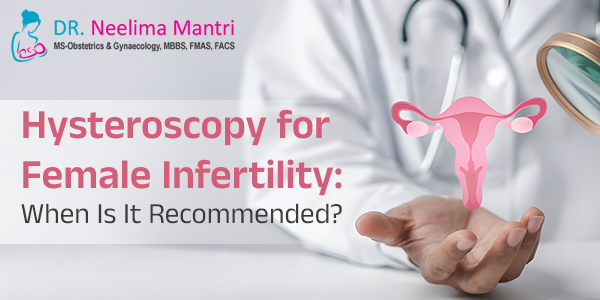
Infertility can be hard to deal with. It brings questions. It brings stress. And it brings the need for answers. One way doctors get those answers is through a procedure called hysteroscopy. Hysteroscopy is a simple way to look inside the uterus.
A small camera goes in through the cervix. No cuts. No stitches. It helps the doctor see if something is stopping a pregnancy from happening. For many women, it provides clarity. For others, it’s the first step toward treatment.
When Is Hysteroscopy Recommended for Infertility Treatment?
Hysteroscopy is advised when scans or blood tests don’t explain the cause of infertility. It’s also suggested if you’ve had repeated miscarriages or failed IVF cycles. Some women experience heavy bleeding or irregular periods. Others may have fibroids, polyps, or a uterine septum. These can block the path for a fertilised egg or stop implantation.
If a doctor suspects any of these, hysteroscopy gives a clear view. It helps confirm the diagnosis. It also lets them treat the issue on the spot. Small tools can remove polyps or scar tissue during the same procedure. That saves time. That avoids second surgeries.
Why Is It Done?
Hysteroscopy helps detect problems like adhesions, fibroids, or structural changes in the uterus. These may not always show up in regular ultrasound scans. The procedure improves the success rate of fertility treatments.
It prepares the uterus to receive and support a pregnancy. It’s often done before starting assisted reproductive treatments. Some doctors also use it between IVF cycles to improve outcomes. For many, it is the missing piece of the puzzle.
Is It Safe?
Yes, hysteroscopy is safe. Most procedures are done as day care. You don’t need to stay overnight. The anaesthesia used is light. The scope is thin and flexible. That makes it less painful. Bleeding, cramps, or light discharge may happen after the procedure. But serious risks are rare. The uterus heals quickly. There are no external scars.
How Long Does Recovery Take After Hysteroscopy?
Most women go home a few hours after the procedure. They rest the same day. Normal activity can resume in a day or two. Painkillers may be given for mild cramps. Sexual activity is usually avoided for a few days. Your doctor will guide you based on what was done during the procedure. If any treatment was carried out, like removing fibroids, recovery may take longer. But in most cases, it’s short and manageable.
Finding the Right Expert Matters
If you are thinking about hysteroscopy for female infertility, choosing the right doctor makes all the difference. You need someone with experience in both diagnostics and fertility care. If you’re in Mumbai, you’ll want the best gynaecologist for hysteroscopy in Mumbai. Someone who can explain things clearly.
Someone who can guide your fertility journey with care and detail. One trusted name is Dr. Neelima Mantri, known for her work in advanced gynaecology and infertility treatment. She takes time to assess your history. She explains the reasons behind each step. And most importantly, she offers a personalised approach for every patient.
Your Fertility Journey Deserves Clarity
Hysteroscopy is not the first test in infertility care. But it’s often the one that brings real answers. It shows what scans miss. It treats what others cannot. And for many, it opens the door to pregnancy.
Ask your doctor if it’s right for you. Talk about timing. Discuss risks. Understand the benefits. Your fertility plan should be based on facts, not guesswork. When used at the right time, hysteroscopy gives you more control. More insight. And a better chance at starting the family you’ve been hoping for.

by Dr Neelima Mantri | Sep 17, 2024 | Blog, Infertility Treatment
Infertility, miscarriage, pelvic pain, and tubal issues – Hysterosalpingography (HSG) is a commonly recommended diagnostic procedure for those facing fertility challenges or gynecological problems.
Despite its frequent use, many women may still need to understand its importance and implications. Increasing awareness about HSG is essential, as it plays a critical role in diagnosing and addressing various reproductive health concerns. This specialized X-ray helps to find potential issues within the uterus and fallopian tubes that could be affecting your fertility.
Whether your gynecologist has recommended this test or you’re simply exploring your options, this comprehensive guide will explain the procedure, how to recover, and what the results might mean for you.
What is a Hysterosalpingogram (HSG)?
The Hysterosalpingogram procedure is an essential diagnostic tool in reproductive health. It’s a type of X-ray that provides detailed images of your uterus and fallopian tubes. During the procedure, a special dye is gently injected into your uterus through the cervix. This dye highlights these areas on X-ray images, allowing your doctor to identify any blockages, scarring, or abnormalities that could impact your ability to conceive.
“An HSG test can be a pivotal step in understanding fertility challenges. Although it might seem daunting, knowing what to expect can ease your worries and help you take control of your reproductive health,” explains best gynaecologist in Mumbai Dr. Neelima Mantri.
Why is an HSG test important?
If you’ve faced difficulties conceiving or experienced recurrent miscarriages, an HSG test might be recommended. Conducted shortly after your menstrual period and before ovulation, this test is crucial for assessing whether your fallopian tubes are open and if your uterus is in a healthy condition to support a pregnancy. This information guides the next steps in your fertility treatment plan.
What to Expect During the HSG Procedure
The Hysterosalpingogram procedure typically takes about 15 to 30 minutes. Here’s a brief overview of what happens:
- Preparation:You’ll lie on an X-ray table in a position similar to a pelvic exam, with a speculum inserted to access your cervix.
- Dye Injection:A thin catheter is inserted into the cervix, introducing a contrast dye into your uterus.
- X-ray Imaging:As the dye moves through your reproductive system, X-ray images are captured to identify potential issues.
- Completion:Once the images are taken, the speculum and catheter are removed, and you can usually go home shortly after.
Is the HSG Test Painful?
It’s natural to be concerned about discomfort during the HSG test. Most women experience sensations similar to menstrual cramps, which can vary in intensity. Your doctor may suggest a mild pain reliever before the procedure to alleviate any discomfort. While the test might be uncomfortable, it’s generally well-tolerated, and the insights gained into your reproductive health are worth the temporary discomfort.
Recovery after the HSG Test
Recovery is usually smooth, with most women resuming their normal activities the same day. You may experience mild cramping or light spotting, but these symptoms typically resolve quickly. If you experience severe pain, fever, or heavy bleeding, contact your doctor immediately, as these could indicate complications.
Understanding Your HSG Test Results
Your gynecologist will review your HSG results and discuss them with you. Here are some possible outcomes:
- Expected Results:If the dye flows freely through your uterus and fallopian tubes, it indicates no blockages or structural issues, a positive sign for fertility.
- Blocked Tubes: If the dye cannot pass through one or both fallopian tubes, it may suggest a blockage, which could potentially affect conception.
- Uterine Abnormalities: The test may reveal issues like fibroids or polyps, which could impact your ability to conceive or maintain a pregnancy.
What’s Next?
Your gynecologist will guide you through the following steps based on your HSG results. If the results are expected, it’s reassuring, but further evaluation or treatment might still be necessary. Additional testing or treatment options may be recommended if blockages or abnormalities are found.
The Hysterosalpingogram procedure is a crucial step in understanding your fertility health. If you’re uncertain about what comes next, don’t worry—you don’t have to go through it alone. Consulting Dr. Neelima Mantri, the best gynecologist in Mumbai, can provide you with the support and answers you need. For those seeking a compassionate female perspective, Dr. Mantri is here to offer personalized care and help you navigate your fertility journey with confidence.

by Dr Neelima Mantri | Jun 20, 2024 | Laparoscopic Surgery
Oophorectomy, the surgical removal of one or both ovaries, is a procedure that carries significant implications for women’s health and well-being. In this blog, we delve into the purpose behind oophorectomy, the surgical process involved, potential risks, and the recovery journey post-surgery.
Understanding the Purpose of Oophorectomy
Oophorectomy serves several purposes depending on the patient’s medical condition and needs:
- Treatment of Ovarian Conditions: Oophorectomy may be performed to treat ovarian cysts, tumors (benign or malignant), endometriosis, or ovarian torsion.
- Cancer Prevention or Treatment: In cases where there is a high risk of ovarian cancer or to prevent its spread, oophorectomy may be recommended as a preventive measure or part of cancer treatment.
- Hormonal Management: Oophorectomy can impact hormone production, making it a treatment option for conditions like hormone-sensitive cancers or severe hormonal imbalances.
- Reproductive Health Decisions: Some individuals opt for oophorectomy as part of family planning, especially if they have completed childbearing or wish to reduce cancer risks associated with certain genetic mutations.
The Oophorectomy Surgical Procedure
1. Preoperative Preparation
Before undergoing oophorectomy, patients undergo thorough preoperative assessments, including a medical history review, physical examination, and possibly imaging tests. Discussions about the procedure, its risks, benefits, and potential alternatives are also part of the preparation phase.
2. Anesthesia and Incision
Oophorectomy is typically performed under general anesthesia to ensure the patient is unconscious and pain-free during the surgery. The surgeon makes incisions in the abdomen, either through traditional open surgery or minimally invasive laparoscopic techniques.
3. Ovary Removal and Closure
During the procedure, the surgeon carefully removes the affected ovary or ovaries. If both ovaries are removed (bilateral oophorectomy), it induces menopause if the patient hasn’t reached it naturally. The incisions are then closed using sutures or surgical staples.
Risks Associated with Oophorectomy
While oophorectomy is generally safe, it carries potential risks and complications, including:
- Bleeding: Excessive bleeding during or after surgery.
- Infection: Risk of surgical site infection or pelvic infection.
- Adverse Reaction to Anesthesia: Complications related to anesthesia administration.
- Damage to Surrounding Structures: Rare instances of damage to nearby organs or blood vessels.
- Hormonal Changes: Menopause symptoms if both ovaries are removed, such as hot flashes, mood changes, and vaginal dryness.
Recovery Journey After Oophorectomy
The recovery period following oophorectomy varies based on the surgical approach, the patient’s overall health, and any underlying conditions. General guidelines for recovery include:
- Hospital Stay: The length of hospitalization varies but is typically shorter for minimally invasive procedures.
- Pain Management: Medications are prescribed to manage postoperative pain.
- Activity Restrictions: Patients are advised to avoid heavy lifting and strenuous activities initially.
- Follow-up Care: Scheduled follow-up appointments to monitor healing, discuss hormone replacement therapy if needed, and address any concerns.
Conclusion
Oophorectomy is a surgical procedure with diverse applications, from treating ovarian conditions to managing cancer risks and hormonal imbalances. While it offers potential benefits, patients should be aware of the associated risks and considerations, including the impact on reproductive health and hormonal balance.
For personalized guidance, comprehensive care, and expert surgical interventions related to oophorectomy and women’s health concerns, consult with a qualified gynecologist and laparoscopic surgeon in Mumbai like Dr. Neelima Mantri. With her expertise and dedication to patient well-being, Dr. Mantri ensures optimal outcomes and support throughout the oophorectomy journey.
Page 1 of 712345...»Last »