by Dr Neelima Mantri | Mar 6, 2026 | Blog, Gynecologist
Women seeking expert gynecological care in South Mumbai can consult Dr. Neelima Mantri at the renowned Bombay Hospital and Research Centre, Marine Lines. Known for its legacy of medical excellence, Bombay Hospital provides comprehensive women’s healthcare supported by advanced infrastructure and multidisciplinary expertise.
About Dr. Neelima Mantri
Dr. Neelima Mantri is an experienced gynecologist associated with Bombay Hospital, offering consultation for routine as well as complex gynecological conditions. She is known for her patient-focused approach, detailed counseling, and evidence-based treatment plans, ensuring women receive accurate diagnosis and compassionate care.
Gynecological Services Offered
Dr. Neelima Mantri provides specialized gynecological consultations at Bombay Hospital, including:
- Treatment for menstrual disordersand hormonal imbalances
- High-risk pregnancy carewith multidisciplinary medical support
- Diagnosis and management of ovarian cysts
- Care for uterine fibroids
- Advanced gynecological procedures and surgeries
- Preventive women’s health checkups and general gynecology
Why Choose Bombay Hospital, Marine Lines?
Bombay Hospital is one of Mumbai’s most trusted tertiary care hospitals. Consulting here offers several advantages:
- Access to advanced medical infrastructure
- Multidisciplinary support for complex and high-risk cases
- Well-equipped operation theaters and diagnostic facilities
- Trusted hospital environment with a legacy of quality care
Consultation Focus Areas
- High-risk pregnancy care
- Menstrual disorders
- Ovarian cyst evaluation
- Fibroids management
- Advanced gynecology care
Consultation Timings
Dr. Neelima Mantri is available for gynecology consultations at Bombay Hospital during the following hours:
Monday to Saturday
1:00 PM – 4:00 PM
These timings are convenient for working women and families in South Mumbai.
Hospital Location & Address
Bombay Hospital and Research Centre is centrally located in Marine Lines, making it easily accessible from all parts of South Mumbai.
Book a Gynecologist Consultation at Bombay Hospital
If you are looking for a trusted gynecologist in Marine Lines, Mumbai, consult Dr. Neelima Mantri at Bombay Hospital for expert-led, comprehensive women’s healthcare supported by advanced hospital facilities.
Address:
203, Level 2, New Wing,
12, New Marine Lines,
Mumbai – 400020
Location: Marine Lines, Mumbai
Appointment: +91 7045115577
by Dr Neelima Mantri | Feb 25, 2026 | Blog, Gynecologist
Women seeking reliable and compassionate gynecological care in Vile Parle East, Mumbai, can consult Dr. Neelima Mantri at AUM Health. The clinic is known for providing personalized women’s healthcare with a focus on comfort, clarity, and clinical excellence.
About Dr. Neelima Mantri
Dr. Neelima Mantri is an experienced gynecologist offering consultation for both common and complex women’s health concerns. She is appreciated by patients for her clear explanations, accurate diagnosis, and patient-centric approach, ensuring every woman feels informed and confident about her treatment plan.
Gynecological Services Offered
At AUM Health, Dr. Neelima Mantri provides comprehensive gynecological consultations, including:
- Treatment for irregular periods and menstrual disorders
- PCOS (Polycystic Ovary Syndrome) diagnosis and management
- Evaluation and care for dermoid cysts and ovarian cysts
- Fertility and infertility consultations
- Pregnancy care and guidance
- Advice and treatment planning for laparoscopy surgery
- General gynecology and preventive women’s health checkups
Why Choose AUM Health in Vile Parle East?
AUM Health is designed to provide a calm and private environment for women seeking gynecological advice. Key highlights include:
- Patient-friendly and confidential consultation setting
- Personalized attention for every health concern
- Easy accessibility in Vile Parle East, Mumbai
- Focus on evidence-based and ethical medical care
Consultation Focus Areas
- Irregular periods treatment
- PCOS and hormonal imbalance care
- Dermoid cyst and ovarian cyst evaluation
- Fertility consultation
- Laaroscopy advice and surgical guidance
- General gynecology
Book a Gynecologist Consultation in Vile Parle East
If you are looking for a trusted gynecologist in Vile Parle East, consult Dr. Neelima Mantri at AUM Health for compassionate, expert-led women’s healthcare. Early consultation helps in timely diagnosis and effective treatment of gynecological concerns.
Clinic Location & Address
AUM Health is conveniently located in Vile Parle East, making it accessible for women across Mumbai.
Address:
C/402, Zee Shaan, Zee Corporate Park,
Opp. Sun City Cinema, M. G. Road,
Vile Parle East, Mumbai – 400057
by Dr Neelima Mantri | Feb 20, 2026 | Blog, Gynecologist
Pregnancy brings joy mixed with worry when you want everything to go perfectly for nine months until your baby arrives safely. Choosing the right doctor matters tremendously because pregnancy care shapes outcomes for both mother and child through every stage. The best pregnancy care gynaecologist in Mumbai guides you through monthly checkups and watches for problems before they become emergencies. Your doctor becomes your partner during this journey, and picking someone experienced and attentive makes the entire experience less frightening.
Experience With Complex Cases Sets Top Doctors Apart
The best gynaecologist for pregnancy in Mumbai has managed thousands of pregnancies, including complicated cases that demanded quick thinking and expertise. Experience teaches doctors to spot warning signs early when problems first develop rather than waiting until situations become critical. Newer doctors might miss subtle symptoms that veterans recognise instantly from years of practice with diverse patients. This depth of knowledge protects you when unexpected complications arise during what seemed like a normal, healthy pregnancy.
High-risk pregnancies need specialists who understand conditions like gestational diabetes or preeclampsia that threaten both mothers and babies. A pregnancy care doctor in Mumbai with advanced training handles these situations calmly because they have guided similar patients through safely. Generic gynaecologists might refer you elsewhere when complications emerge, but specialists manage complex cases directly without disrupting your care. Continuity matters because switching doctors mid-pregnancy means starting over with someone unfamiliar with your history.
Personalised Attention Makes Pregnancy Less Stressful
The top pregnancy doctor in Mumbai takes time answering your questions rather than rushing through appointments to see more patients daily. Pregnancy raises countless worries, and having a doctor who listens without making you feel silly for asking matters emotionally. You need someone who explains test results clearly and discusses options thoroughly when decisions about your care arise. Feeling heard and respected by your doctor reduces the anxiety that naturally comes with carrying a baby for months.
Modern Facilities Support Better Outcomes When Emergencies Happen
Healthy pregnancies can become urgent at any moment, and the availability of great facilities is a decisive factor in the results of mothers. In case the gynaecologist in Mumbai is the best and the hospitals he works at have neonatal intensive care units and advanced surgical facilities. Distance matters during emergencies, so choosing a doctor near quality facilities you can reach quickly provides peace of mind. Labour progresses unpredictably, and having everything needed close by protects you when timing becomes absolutely crucial for safety.
Technology helps doctors monitor baby development and catch abnormalities earlier than older methods allowed just a few years back. Modern ultrasound equipment provides clearer images that reveal potential issues whilst babies still grow inside the womb safely. A pregnancy care specialist in Mumbai uses these tools routinely to track growth and ensure everything progresses normally month after month. Early detection of problems gives you more options and better chances of addressing concerns before birth complications arise.
High Risk Pregnancies Demand Specialised Expertise
Women over thirty-five or those with existing medical conditions need doctors specifically trained in managing high-risk situations carefully. The high-risk pregnancy doctor in Mumbai coordinates care between specialists when conditions like diabetes or heart problems complicate pregnancy. These situations demand monitoring beyond standard prenatal visits because risks increase for both mother and developing baby. Choosing someone experienced with your specific risk factors dramatically improves the chances of healthy outcomes despite challenges.
Previous pregnancy losses or complications make subsequent pregnancies emotionally difficult beyond just the physical medical concerns involved. Doctors experienced with high-risk cases understand the psychological toll and provide reassurance backed by careful monitoring throughout. This combination of technical skill and emotional support helps anxious mothers stay calm whilst receiving excellent medical attention. Specialist care costs more sometimes, but the investment protects your health and gives your baby the best possible start.
Pregnancy is a process that should be given professional care by a person who is not only a medical genius but also has a strong sense of empathy towards patients during this transformative period. Dr Neelima Mantri offers a wide range of pregnancy care, including regular checkups and complicated cases that need the attention of a specialist.
by Dr Neelima Mantri | Jan 21, 2026 | Blog, Gynecologist
Pregnancy changes the body in many ways. One of the most common questions women ask after giving birth is when their period will return. Some expect it to come back within weeks, while others may not see it for several months. Every experience is different. That is why understanding the timing and nature of your first period after delivery can help you prepare better for the postpartum phase.
When Do Periods Return After Pregnancy?
The return of menstruation after childbirth does not follow a set rule. It depends on how the body heals and whether the woman is breastfeeding. For some, the first period may arrive within six to eight weeks. For others, it may take longer.
Hormones play a large role in this timing. If you are not breastfeeding, your period may come back sooner. But if you are nursing, especially exclusively, your cycle may pause for several months. Many women wonder how long after delivery do periods return, but there is no fixed number. Every body works at its own pace.
How Breastfeeding Affects Periods After Delivery
Breastfeeding affects hormone levels. The hormone responsible for milk production, called prolactin, also delays ovulation. This is why many women do not get their periods while breastfeeding. However, it is still possible to ovulate and become pregnant even before the first postpartum period.
Hence, it is imperative to use protection [if you are not planning another pregnancy]. Periods after breastfeeding often return once feeding frequency drops or solid foods are introduced. This process can vary, so staying alert to changes in the body is always helpful.
What to Expect From Your First Period After Childbirth
The first period after childbirth may feel different from your pre-pregnancy cycle. It could be heavier, lighter, more painful, or completely irregular [as these changes are linked to hormone shifts and uterine recovery].
Postpartum periods may also bring more noticeable mood changes and fatigue. Some women report heavy flow or clots [especially during the first few cycles]. For women who had a caesarean, periods after C-section may also vary. Healing from surgery can affect the uterus and change the flow or timing for a few months.
When to See a Gynaecologist for Postpartum Period Problems
If your periods remain extremely heavy, painful, or irregular beyond a few cycles, it is best to speak to a doctor. You should also watch out for signs such as foul-smelling discharge, large clots, or sudden cramps [indicating infection or other complications]. When cycles do not return even after stopping breastfeeding for months, medical review is important.
Therefore, seeking assistance from a trusted Gynaecologist in Mumbai streamlines and manages such complications. Be sure to consult Dr Neelima Mantri for ongoing support during postpartum recovery and menstrual health.
Conclusion
The journey through postpartum recovery includes more than just feeding and rest. Understanding your period after pregnancy is an important part of staying in tune with your health. Some women get their period within weeks while others wait several months.
The return of menstruation after childbirth may bring some surprises [be it a vaginal delivery or a C-section]. Each cycle is your body’s way of returning to balance. By paying attention and seeking help when needed, you can make this transition smoother and more manageable.
by Dr Neelima Mantri | Dec 22, 2025 | Blog, Gynecologist
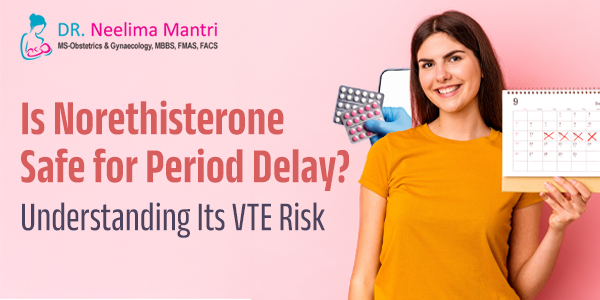
Delaying your period can feel like a simple choice when you are planning a trip, wedding, or exam schedule. Many women turn to medication for this purpose, especially if their cycle is regular but inconvenient. One such option is norethisterone. It is often prescribed to hold off menstruation for a few days or even up to two weeks. But what about the risks? Is it really safe for everyone? Join us as we debunk these fundamentals.
What Is Norethisterone and How Does It Delay Periods?
Norethisterone is a synthetic hormone that is similar to progesterone. It works by ensuring that the uterine lining continues to develop and does not come off prematurely. When taken a few days before the period is expected, this postpones the onset of the bleeding until the tablets are stopped.
The typical dosage is 5 mg taken three times a day. Most doctors suggest using it for no more than 17 days. Once you stop the medication, the period usually begins within two to three days. The method is reliable for most users and offers short-term control over timing.
Is Norethisterone Safe? Understanding Its Benefits and Common Side Effects
For many, the answer is yes! In the short term, and when properly prescribed, norethisterone usually is well tolerated. It has been used for decades and is deemed to be a practical tool to delay bleeding.
However, norethisterone’s safety for period delay must be viewed case by case. Some users report mild side effects such as nausea, headache, mood changes, and breast tenderness. In a few cases, women notice spotting or period changes in the cycle that follows.
Still, these are manageable for most. The real concern arises when norethisterone is taken by people with underlying health risks.
VTE Risk: Can Norethisterone Increase Blood Clot Formation?
One of the serious concerns is the possibility of a blood clot. This is referred to medically as venous thromboembolism (VTE). The condition can include deep vein thrombosis (usually in the leg) or pulmonary embolism (clot reaching the lungs).
The VTE risk menstrual delay pills carry is low but still important. Since norethisterone acts like progesterone, it may increase clotting tendency slightly. For someone with no other risks, this may not be a problem. But if you have a history of blood clots, obesity, recent surgery, or a strong family history, you must tell your doctor before starting the medication. Understanding the blood clot risk with norethisterone is crucial, especially in hot or long-distance travel situations where the body may already be under stress.
Who Should Avoid Norethisterone? Safer Alternatives for Period Delay
The list includes those with past clotting disorders, certain liver conditions, hormone-sensitive cancers, or unexplained vaginal bleeding. The guidance on who should not take norethisterone also applies to those with migraine with aura, poorly managed blood pressure, or active cardiovascular problems.
In such cases, other solutions may be recommended. Some oral contraceptives or IUD-based approaches may offer better control with reduced risk. Consulting a gynaecologist before using any hormonal pill for delay is essential.
Women seeking a safer option can start by speaking with experts. Many consider the best gynaecologist for menstrual issues Mumbai for personalised advice, especially before taking medication for non-medical timing reasons. Patients facing recurrent hormonal disturbances may benefit from long-term evaluation and period irregularities treatment Dr Neelima Mantri or other qualified professionals provide in major centres.
Conclusion
Delaying a period using medication can feel like a convenience, but it must be handled with care. Norethisterone is effective for many, but not risk-free. Understanding when to use it and when to skip it protects your health while giving you more control over your cycle. It is always better to choose informed care over quick fixes. Speak to a trusted gynaecologist before making any changes to your hormonal routine.
by Dr Neelima Mantri | Sep 6, 2025 | Blog, Gynecologist
The journey of childbirth brings both joy and stress. While the baby becomes the focus of everyone around, the mother’s body goes through silent changes that are often overlooked. These changes are not just physical but emotional as well.
From body aches to mood shifts, this period brings several new layers of recovery. Most women go through these shifts without fully understanding what is normal and what needs support.
This is why the role of a trusted doctor becomes critical during this stage. Many new mothers search for the best female gynaecologist in Mumbai to guide them through recovery and help them stay healthy during the weeks after delivery.
Understanding What New Mothers Go Through
After childbirth, the body begins to return to its pre-pregnancy state. The uterus starts shrinking back to its original size. The muscles feel weak. There is soreness around the pelvic region. Hormone levels change without warning. Sleep becomes disturbed. Breastfeeding comes with its own set of physical demands.
All of this takes place while the mother is adjusting to a new routine filled with feeding cycles and sleep gaps. These are common new mothers’ health challenges, and while they are expected, they must be addressed before they grow into more serious health concerns.
Common Health Issues and What Helps
One of the first concerns most new mothers raise is body pain. This includes lower back discomfort along with neck stiffness caused by the feeding posture. Bleeding may last longer than expected. There may be stitches that take time to heal.
Constipation becomes frequent. Emotional changes are also common. Some women feel low for hours each day. Some go through complete emotional withdrawal. If any of these symptoms last longer than two weeks, they must be shared with a doctor.
The best solutions for new mothers’ health problems include timely check-ups, simple physical therapy, nutrition support, and open emotional counselling. All of these work together to help the body reset at a steady pace.
How Can New Mothers Recover Faster After Childbirth
Recovery does not follow a fixed timeline. Some women bounce back within weeks, while others take longer. The healing depends on overall health before delivery, along with the type of birth and support received at home. That said, a few steady habits help nearly everyone. Nutritious meals rich in iron, along with calcium, keep energy levels steady. Hydration improves sleep along with digestion. Light movement improves blood flow and eases swelling.
Sleep should be adjusted to match the baby’s pattern as closely as possible. Above all, honest conversations with your doctor make a real difference. If you ask how new mothers can recover faster after childbirth, the first step is building a simple plan with your doctor and following it with patience.
Why Choosing the Right Doctor Matters
Recovery becomes easier when the guidance is clear and the support is consistent. This is where the experience of a gynaecologist becomes valuable. They track your healing at every stage and give you early signs to watch for. They help treat hidden infections. They guide you through lactation and postpartum bleeding.
They also support your emotional well-being without judgment. Many women choose the best gynecologist in Mumbai not just for birth but for the weeks that follow. A good doctor stays with you beyond delivery and helps bring stability during the ups and downs of new motherhood.
Every mother deserves care that is consistent and calm. The right recovery does not come from rushing. It comes from knowing what to expect and having a doctor who listens without delay. If you are facing health concerns after childbirth or simply want steady guidance, speak with Dr Neelima Mantri.
She is known as the best female gynaecologist in Mumbai and is often recommended as the best gynecologist in Mumbai for women who want clear advice and steady care. Her support helps new mothers feel confident and stay strong as they step into the next phase of life.
Page 2 of 15«12345...10...»Last »