
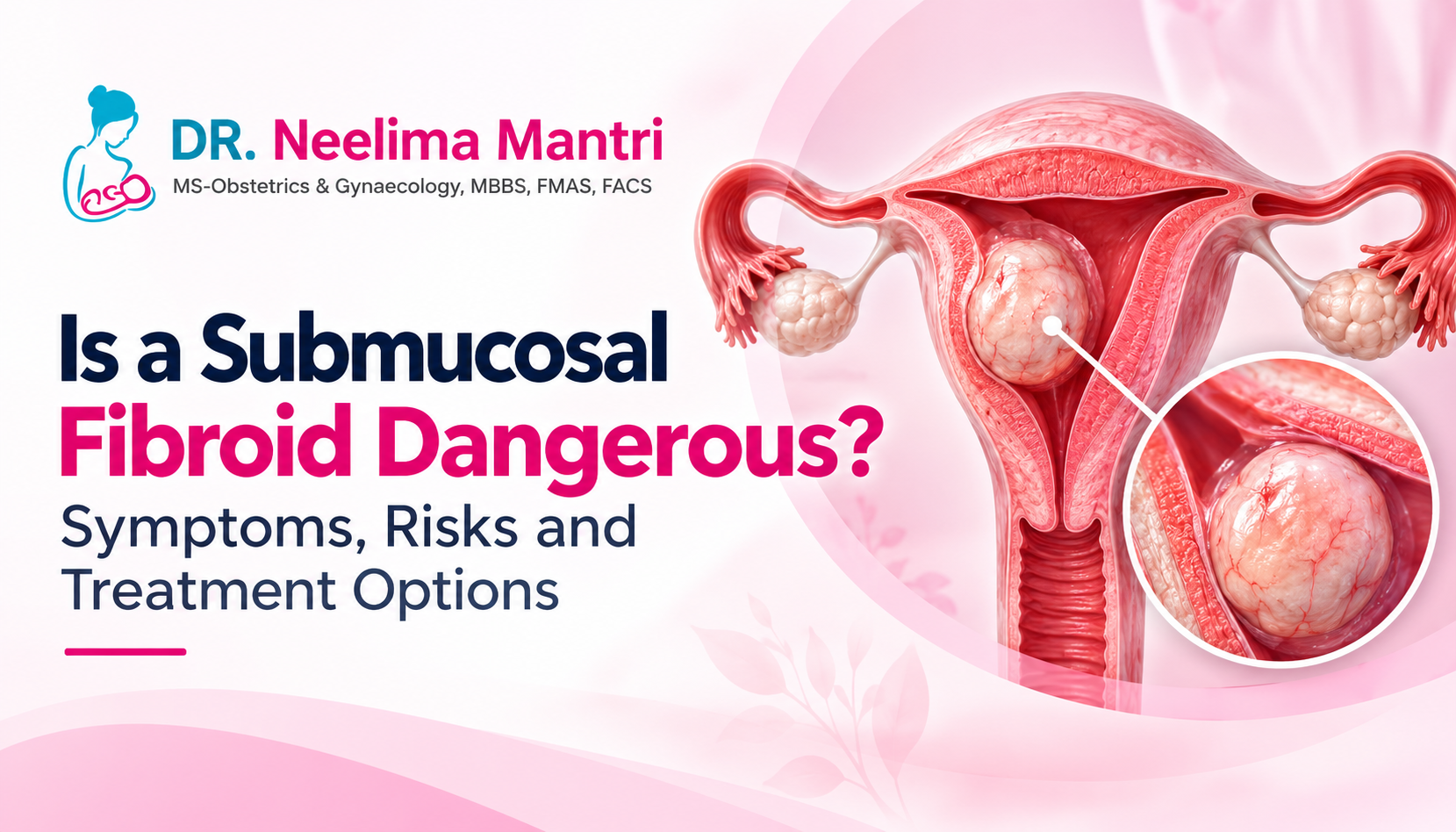
Imagine experiencing unusually heavy periods every month, accompanied by painful cramps and constant discomfort. Initially, you might think it is just another menstrual problem that will eventually disappear. But what if these symptoms continue for several months? Well, one possible reason could be a submucosal fibroid, a type of uterine fibroid that grows towards the inner cavity of the uterus. Now, you might be wondering: Is a submucosal fibroid dangerous? In this post, we will explore submucosal fibroid symptoms and treatment, potential complications and available medical solutions.
What Exactly Is a Submucosal Fibroid?
Before understanding whether this condition is serious, it is important to know what a submucosal fibroid actually is. Fibroids are non-cancerous growths that develop from the muscular tissue of the uterus. However, unlike other types of fibroids, submucosal fibroids grow just beneath the uterine lining and may extend into the uterine cavity. Interestingly, even a relatively small submucosal fibroid can cause noticeable symptoms because of its location. Hence, identifying the type and position of the fibroid is important before deciding on treatment.
What Are the Symptoms of a Submucosal Fibroid?
The symptoms of submucosal fibroids can vary depending on their size, location and number. For example, some women may experience unusually heavy menstrual bleeding, while others may notice prolonged periods or painful cramps. In certain cases, frequent bleeding can also lead to iron-deficiency anaemia, resulting in tiredness and weakness. Another possible symptom is pelvic pressure or discomfort. However, not every woman experiences the same symptoms. Therefore, persistent menstrual changes should be evaluated by a qualified gynaecologist rather than being ignored.
Can Submucosal Fibroids Affect Fertility?
Yes, submucosal fibroids can sometimes interfere with fertility, particularly when they distort the uterine cavity. For example, a fibroid growing inside the cavity may make it difficult for an embryo to implant successfully. In some cases, these fibroids may also increase the risk of miscarriage. However, this does not mean every woman diagnosed with a submucosal fibroid will experience infertility. The actual risk depends on several factors, including the fibroid’s size, location and the woman’s reproductive health.
What Are the Available Treatment Options?
Now that you understand the possible complications, the next question is how these fibroids are treated. Well, the appropriate treatment depends on your symptoms, fibroid characteristics and future pregnancy plans. For example, mild cases may only require regular monitoring or medication to control bleeding. On the other hand, symptomatic fibroids may require surgical removal. Hysteroscopic myomectomy is one option that removes suitable submucosal fibroids through the cervix while preserving the uterus. Hence, fibroid treatment without hysterectomy may be possible for many women.
How Is a Submucosal Fibroid Diagnosed?
Before recommending treatment, a gynaecologist will usually examine your symptoms and medical history. Pelvic ultrasound is commonly used to identify uterine fibroids and determine their approximate location. However, additional investigations, such as saline infusion sonography or hysteroscopy, may be recommended to understand how much the fibroid extends into the uterine cavity. These findings help determine whether monitoring, medication or surgical treatment is appropriate. Therefore, consulting an experienced specialist is important, especially when heavy bleeding or fertility concerns are involved.
Consult Dr Neelima Mantri for Fibroid Treatment in Mumbai
If you are experiencing persistent menstrual problems or have been diagnosed with uterine fibroids, consulting an experienced fibroid specialist in Mumbai can help you understand your options. Dr Neelima Mantri is an obstetrician, gynaecologist and laparoscopic surgeon with over two decades of experience. She offers evaluation and management of uterine fibroids, including minimally invasive gynaecological procedures where appropriate. For women seeking uterine fibroid treatment in Mumbai, her expertise can help guide personalised treatment decisions. Book your consultation today and take the first step towards managing your reproductive health.

