

Many individuals undergoing surgery related to reproductive organs often wonder about their chances of conceiving in the future. Whether it’s a procedure for fibroids, endometriosis, ovarian cysts, or even a caesarean section, surgery can raise concerns about long-term fertility. The good news is that many people do go on to have successful pregnancies after surgery.
However, it depends on several factors including the type of surgery, the condition being treated, and individual reproductive health. Knowledge of how surgery affects fertility is useful in managing expectations and finding the best way toward conception.
Types of Surgeries That Affect Fertility
It is important to note that not all surgeries are equal in terms of their effects on the reproductive health of women. Some of the minor surgeries like diagnostic laparoscopy or removal of cysts that are small in size may not cause much impact. However, surgeries that involve the uterus, fallopian tubes, or ovaries are likely to affect fertility in some way.
For instance, operations that involve the cutting out of fibroids (myomectomy) can enhance fertility if the fibroids are hindering implantation. However, if the surgery leads to scarring or makes the wall of the uterus thin, then it may be dangerous during subsequent pregnancies. Likewise, surgeries on the fallopian tubes may enhance the possibility of natural conception, but at the same time may lead to blockage or harm in the event of surgery.
How Surgery Can Affect Reproductive Function
Surgery can have an impact on fertility positively or negatively. It is often done to fix an issue that was causing infertility in the first instance. Surgery may help in clearing blockages, treating infections, or correcting organ dysfunction, which may enhance fertility.
Nevertheless, there is a possibility of forming scar tissue, called adhesions, which may alter the mobility and function of reproductive organs. If the adhesions develop around the fallopian tubes or ovaries, they can block the release of eggs or prevent fertilisation. In such circumstances, it is advisable to consult an infertility doctor in Mumbai to determine the severity of the problem and the available fertility-friendly measures.
When to Try for Pregnancy After Surgery
It is therefore important to know when to attempt conception after surgery. The body requires time to heal before it is ready to carry a pregnancy, as it is a delicate process. In general, it is advised that women should wait for a few months after the surgery to attempt to conceive, especially if the surgery is complex or if the area of the body that was operated on is related to conception.
A complete check may be carried out to check on the functioning of the uterus, ovaries, and other related organs. The hormone levels, ovulation cycles, and general reproductive health are checked before one is cleared to start trying for pregnancy. Any woman who is planning for pregnancy after surgery should seek the services of the best gynaecologist in Mumbai to advise on the best post-surgery fertility plan that will suit the woman.
Fertility Support and Specialist Care
If conception does not take place after several months of trying, it is advisable to seek a fertility assessment. This may involve blood tests, ultrasound, and in some cases other tests to check on the quality of the eggs, ovulation, and the reproductive organs.
In such cases, consultation with the best obstetrician in Mumbai or fertility specialists can help clear the confusion. If natural methods do not help to conceive, other options like ART, hormone therapy, or surgery to fix complications arising from previous surgery may be used.
Fertility after surgery is a process that is unique to every woman. Some women get pregnant without any help after surgery, while others may need some assistance. In this way, the procedures that affect reproductive health can be better understood.
Moreover, with the help of the best gynaecologist in Mumbai or an infertility specialist in Mumbai, one can make the right decision about having a baby. It is, however, important to note that pregnancy after surgery is not only possible but can be quite successful if the woman takes good care of herself and is patient.
Pregnancy After Reproductive Surgery
Surgery involving the reproductive organs can raise many questions about future fertility. Most patients want clear answers. Can they get pregnant again? Is there a waiting period after surgery? Will they need assisted reproductive treatments? The concerns are valid!
Surgery may address medical issues, but its effect on fertility depends on several factors, like the complexity of surgery and the patient’s overall reproductive health. Join us as we analyse how different types of gynaecological surgeries influence fertility and what steps may help in
planning a pregnancy afterward.
Fertility After Fibroid Removal Surgery:
Fibroids are common growths in the uterus. In some cases, they cause pain, heavy bleeding, or interfere with conception. Surgical removal of fibroids is known as myomectomy. The surgery is usually performed when fibroids affect the shape of the uterus [or block the fallopian tubes].
Many women conceive successfully after fibroid surgery. The outcome depends on where the fibroids were located and how much of the uterine wall was involved. Recovery time is important. The uterus must heal properly before it can carry a pregnancy. Patients are usually advised to wait for a few months. During this time, the uterine lining regains strength. In most cases, fertility improves once normal anatomy is restored.
Chances Of Pregnancy After Ovarian Cyst Surgery:
Ovarian cysts can form for several reasons. Most are harmless. Some, however, grow large or become painful. If a cyst does not resolve on its own, surgery may be recommended. When only the cyst is removed and the ovary is preserved, the impact on fertility is low. But if part of the ovary has to be removed, the number of available eggs may decrease.
This is called a drop in ovarian reserve. After recovery, many women ovulate normally and can conceive without assistance. Others may benefit from fertility testing. If the ovarian function is affected, early planning becomes important.
Fertility After Endometriosis Surgery
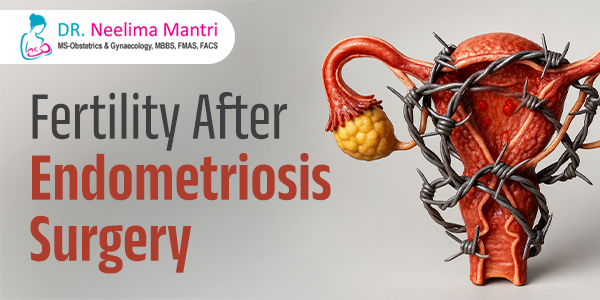
Endometriosis is experienced when tissue similar to the uterine lining grows outside the uterus. It often causes pain and can interfere with fertility. Surgical treatment helps remove the abnormal tissue and clear adhesions.
For mild or moderate endometriosis, surgery can improve the chances of natural conception. In severe cases, where organs are stuck together, results vary. The goal of surgery is to restore pelvic anatomy. Even after surgery, ongoing management may be needed. Pain relief does not always mean fertility improvement. That is why regular follow-up is essential.
Fertility Recovery Post-Surgery:
After any reproductive surgery, the body needs time to recover. The uterus, ovaries, or tubes must regain normal function. Doctors usually advise waiting before trying to conceive. This period allows healing and reduces the risk of complications.
Blood tests and scans may be used to check recovery. Some women may need support from the best gynaecologist in Mumbai or a specialist who can guide them through the next steps. Fertility outcomes are better when surgery is followed by the right medical advice.
Fertility Specialist Mumbai
Each patient has a unique recovery journey. Seeing the best obstetrician in Mumbai can help assess readiness for pregnancy. Patients who face delays should consult the best lady gynaecologist in Mumbai, such as Dr Neelima Mantri, for further evaluation.
If natural conception does not occur, an infertility specialist in Mumbai may suggest fertility preservation or assisted treatments. These options depend on how the surgery has affected egg reserve, fallopian tubes, or uterine lining.
Pregnancy after reproductive surgery is possible, but planning matters. With the right treatment and follow-up, many patients go on to have healthy pregnancies. Timing, testing, and medical support make all the difference.

